Showing posts with label childhood obesity. Show all posts

Saturday, January 27, 2018

Water and Health in the Bronx: Protecting the Sacred

It is hard to not be awed by the scale and tremendous care that goes into supporting the gigantic system bringing water to New York City and the surrounding counties. Flowing from the Catskill/Delaware Watersheds and the Croton Watershed, approximately one billion gallons of water are consumed in New York City every day, serving 8.5 million residents as well as millions of tourists each year. In all, the New York City Water Supply System provides nearly half the population of New York State with high-quality drinking water.
It is humbling to realize just how dependent all these millions of people are on the water supply functioning the way it is supposed to. Water constitutes about 50-70% of our bodies as human beings. Water from the reservoirs, aqueducts, and street-side sampling stations is quality tested by the Department of Environmental Protection’s scientists, with nearly 630,000 analyses performed on the samples in four state-of-the art laboratories (NYC DEP).

Photo © Kelly Moltzen, NYC Watershed Tour

In my own tradition of Franciscan Catholicism, we are called to protect water as a component of creation care, protecting the Earth and our bodies as temples of God. Saint Francis of Assisi heard a call from God to “repair my house, which…is falling utterly into ruin.” While initially he took this as a call to repair a physical church, he eventually came to understand it as a call to repair the institutional Church and the universal house of God, the common home that we all share here on Earth. His spirituality grew to such depths that he came to regard Earth as Mother Earth, and water as Sister Water. By protecting water, we are protecting our health and that of our fellow sisters and brothers with whom we share the Earth. Unfortunately, in many places in the United States and across the world, oil spills from pipelines, contamination from hydraulic fracturing, and runoff from nuclear power plants and industrial agriculture threaten water supplies. Thus, I see the call to watershed discipleship as extremely important for people of faith.

Photo © Kelly Moltzen, NYC Watershed Tour

Pope Francis explained the risks of water pollution in his 2015 encyclical, Laudato Si’, which many people of faith are using to make the case for why we should care for our common home. He dedicates a whole section of the encyclical to the issue of water – noting the importance of fresh water for healthcare, agriculture and industry; the prevalence of droughts and water poverty; the outbreak of water-related diseases among the poor; water pollution resulting from certain mining, farming and industrial activities; the phenomenon of water privatization by large multinational businesses; and the link between water scarcity and the cost of food and various products which depend on its use. He also notes, “access to safe drinkable water is a basic and universal human right.”

Photo © Kelly Moltzen, NYC Watershed Tour

Yet, my concern about water quality and safety stems not just from the threats modern society and corporate greed pose to water safety. I am also concerned because water is the healthiest drink. I work at Bronx Health REACH, which partners with school districts and a number of faith-based and community organizations to promote water as the best alternative to beverages of poor nutritional quality. In this work, it is necessary to make sure we can point to sources of safe drinking water if we want people to switch away from unhealthy drinks like sodas and drinks high in sugar.
First, I’ll share a little bit about why we are advocating for people to drink more water, and then share about other environmental and health concerns related to our water system. Finally, I’ll mention the work of a number of faith-based and community organizations in and around New York City that work to ensure there is safe drinking water, and that people are accessing it in healthy amounts.

Photo © Kelly Moltzen, NYC Watershed Tour

Soda, sports drinks, fruit-flavored drinks, and other sugar-sweetened beverages may sound appealing and some drinks (such as sweetened teas) sometimes get marketed as “natural” and healthy. Society is swamped with marketing campaigns that make these consumer products sound appealing thanks to billion-dollar advertising budgets, but these products are contributing to high rates of diabetes, obesity, and other chronic diseases, with higher and higher rates of these diseases showing up in young children. In turn, this causes rising healthcare costs for dealing with these diseases.

Photo © Kelly Moltzen, NYC Watershed Tour

In the Bronx, a third of adults consume at least one sugar-sweetened beverage per day, and over half of children do. A third of Bronx children are overweight or obese, as are two thirds of adults (NYC DOHMH).
Not only do sugar-sweetened beverages contribute to the desecration of our own bodies, but often the industrial processes used to create unhealthy beverages also place undue harm on the environment and make public water sources less and less accessible to the people who need them most. None of this is healthy for people or the economy, but these practices line the pockets of corporate executives. By infusing a sense of value on drinking water, Bronx Health REACH is working to ensure the continued safety of our water supplies.
20170912_155310
Photo © Kelly Moltzen, NYC Watershed Tour

In addition to drinking water directly, water is also used to grow food for our local food system. Some of us in the watershed are teaching children about growing food and getting local food into schools, restaurants, and churches. There is even a farm run by Catholic sisters who sell the produce to local parishes for use in farm shares, food pantries and soup kitchens. Bronx Health REACH has been instrumental in developing a “Bronx Salad” that encourages consumption of culturally relevant foods while also encouraging community members to grow some of the produce locally, such as in community gardens. A feature of this salad is the dressing made from the Bronx Hot Sauce, which is made by a local chef with peppers grown in the Bronx. A version of this salad is becoming increasingly available in NYC school cafeterias, thanks to a partnership between school gardening and Farm to School efforts in NYC. As we seek to develop a regional food system and reduce the environmental impact of our food system, we must also seek to protect the water supplies that nourish the crops.

Photo © Kelly Moltzen, NYC Watershed Tour

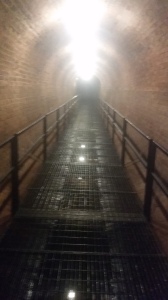
While the water delivered to NYC is pristine and high quality, many New Yorkers remain skeptical of its safety. Therefore, I recently took a tour of the watershed that supplies water to NYC to learn just how safe the water is to drink. The watershed tour guide was immensely knowledgeable, and I became even more deeply aware of the tremendous gratitude and respect we owe to those who work around the clock to make sure that our water is safe. I gained an even greater understanding of the importance of ecology when learning about how the Department of Environmental Protection plants trees upstream from a river to help keep the water pure by filtering out toxins and impurities.
Despite the fact that high-quality water is delivered to NYC, I hear a lot of anecdotal concerns about water safety, at least in the Bronx. Legitimate concerns have been raised since water testing in NYC was examined more critically after the Flint water crisis. It turns out that the pipes bringing water into homes and schools are often old and made of lead, increasing the likelihood of lead leaching into our drinking water. Water samples from 2016-2017 found high levels of lead in some samples of NYC water delivered to schools, leading to outcries about the water’s safety. Even though the NYC Health Department affirms that no cases of lead poisoning have resulted from the high lead levels found in water, any level of lead that makes its way into our bodies is too much. We can reduce the likelihood of lead leaching into our water supply at the individual level by letting the water run before drinking it, only drinking water that comes out of the tap cold (since lead dissolves in hot water), or using special filters that remove lead.
Ideally, we could have well-funded public education campaigns about how to drink water safely, and to replace old pipes with non-lead pipes. But in order to get government and funders to prioritize water safety and public health, we need to tap into our internal spiritual wells, which drive us to improve the quality of life for all, and build increased momentum for the needed changes through advocacy and organizing.

Photo © Kelly Moltzen, NYC Watershed Tour

A loose coalition of organizations in the New York City area partner to ensure a safe water supply and to encourage water consumption. Food & Water Watch has policy campaigns to improve pipe infrastructure. The New York City Health Department and Bronx Health REACH have campaigns to encourage water consumption and educate people about the health risks of sugar-sweetened beverages. Water2Kids is a business started by twin children in the Bronx (with the support of their mother) who wanted to see water — instead of sugar-sweetened beverages — marketed to their age group. Groups like Religious Organizations Along the River (ROAR), the Metro New York Catholic Climate Movement (a chapter of the Global Catholic Climate Movement), and the Center for Earth Ethics of Union Theological Seminary work to protect the New York water supply from projects that could threaten the safety of our water. Churches, including Franciscan and other Catholic parishes in NYC, organize film screenings about water and other environmental issues.
As interdependent creatures, human beings must rely on one another and our ecosystems in order to access the most basic of necessities required to sustain life on Earth. Because of our reliance on our watershed and other natural resources, ensuring our water sources remain uncontaminated is vitally essential and part of the call for us to steward creation. As we are interdependent with the Earth to meet our physical human needs, so the parts of the body of Christ are also interdependent with one another. We all need one another in order to make the impacts we want to make.
It can often feel overwhelming to try and address all of the overlapping and interconnected issues related to ensuring safe and healthy water and food supplies. However, as Wendell Berry says in the documentary Look and See: A Portrait of Wendell Berry, we must work on putting the pieces together one at a time, rather than all at once — such as starting with our own watershed. By taking bite-sized steps to address our ecological crisis while continuing to recognize the interconnectedness of issues and our interdependence with the local ecosystem, we can put faith in action by creating a livable, sustainable future for current and future generations.

Monday, July 9, 2012

Do your part to Leave It Better...support the reGeneration!


Over the past year or so, I've become familiar with the organization Leave It Better and gotten to know a few of its incredible team members.  Leave It Better is an organization which empowers youth to heal the environment, primarily by teaching them gardening and composting skills, as well as filmmaking skills so they can document their experiences as they learn to grow food.  The LIB team then edits the film clips created by the children and shares them online, with the ultimate goal of creating a global youth gardening documentary which will be called "the reGeneration." 

Leave It Better is currently in the tail end of a Kickstarter campaign to raise money for their reGeneration documentary. They recently put together a campaign video where Dominique tells her story of how she developed her passion for gardening and health. Witnessing the suffering that her father went through as a consequence of his poor eating habits, she discovered gardening to be a healthy alternative, a way to take control of one's food choices and therefore one's health. She embodies what it means to take the challenges that life throws at us and create positive solutions which grow healthy, empowered citizens and heal us, our communities, and our environment.  But don't take my word for it - watch the video yourself :)   And consider supporting their efforts to make the reGeneration film a reality by becoming a backer of their Kickstarter campaign


A few years ago when working with students at MS 331 in the Bronx, the Leave It Better team members were approached by a teacher in the school with the suggestion that they should clean up the abandoned park across the street from the school and make it into a garden. They agreed, going through all of the steps necessary to register the garden with the NYC Department of Parks & Recreation/ GreenThumb, get the community involved, and clean up the garden.  Dominique, who wears the hat of Garden Manager amongst many others, also took a class at the NY Botanical Garden to become a Master Composter.  Their work with this garden in the Morris Heights section of the Bronx - which they call the Leave It Better Kids' Garden - has inspired hope in the community and its youth.  The youth are assigned roles and each have their own garden tasks and responsibilities, creating a sense of purpose for them in the community while also providing residents with a tangible solution to the health problems plaguing many neighborhoods in the Bronx:  freshly grown food.  There are garden plots for the youth, the seniors, and even for King of Glory Tabernacle Church down the road.  The entire community, which previously was just like many others in the Bronx - a "food desert" filled with very few healthy food options - now has a direct source of fresh, local produce, as well as a method of empowering kids to create positive change in their neighborhood.  And they've partnered with BronxWorks, a social service organization, to bring a farmers market to the neighborhood too, bringing in yet more fresh produce and employment opportunities for residents who help run the market, which is on Thursdays this summer by University Ave & West 181st Street in the Bronx.  


Leave It Better team members Graham, Dominique and Roz are doing their part to "leave it better" by empowering youth in this Bronx community and in schools citywide to care for the environment, contribute to a sustainable food system, develop healthy eating habits, and be positive change agents in the world around them.  Now it's our turn to do our part.  The reGeneration Kickstarter campaign has raised over $10,000 so far but still needs to raise nearly $25,000 by July 14th in order for the campaign to be funded and any of the pledges to be counted.  But now it's up to us - we must be the change we wish to see in the world. Diet-related diseases cost billions of dollars a year in medical costs, ruining millions of people's quality of life and our national budget. But we have the answers, and they lie in empowering the younger generation to contribute to a sustainable food system and develop healthy eating habits.  We must become the answer to our prayers.  Now is our opportunity to support a worthwhile cause and have the story of youth gardening be captured in a documentary which can be shared worldwide for years to come.  Consider pledging a donation to the Kickstarter campaign and passing the word on to your friends, family and colleagues.  Together we can make a difference. 


Thursday, August 18, 2011

If only all bodegas looked like the one on the northwest corner of 96th & Lex...

Promoting healthy items in corner stores is one of those hot topics in public health right now.


(Market Makeovers video)

Yet, this fad is only beginning to take off in places like the Bronx. I've been working at Bronx Health REACH for the past year, where several years ago the staff were involved in a campaign to promote healthy snacks in bodegas. Well, now it's time to actually encourage community members to advocate for changes to the bodegas themselves, such as through the city Department of Health's Adopt a Bodega initiative.

If community members in schools and churches are educated about the importance of consuming healthy foods, provided some instruction as to how to prepare said healthy foods, and empowered to work towards changing the food environment, would this be enough to actually create lasting change?  I can't say for sure, but I'm excited to find out.

The city's Adopt a Bodega program encourages people to talk to their bodega owners about possible changes they could make to the bodega to promote consumption of healthier foods. They could work towards changing the store inventory, marketing / advertising practices, and/or do a store cleanup, improving the overall look and cleanliness of the store.  Partnerships may be with local schools, churches, or other community-based organizations such as community centers.  (More information available in the toolkit here.)
I think a particularly interesting Adopt a Bodega / community food assessment project could be worked through Citizen Schools, an expanded learning day program in some middle schools in low-income neighborhoods across the country.  The students would get to work on the project 90 minutes per week for 10 weeks, and then present their work to peers and parents. Who knows how many ripple effects this could have.

In my quest to figure out how to get fresh, local produce from the Wholesale Market at Hunt's Point (the largest food distribution center in the country, located in the Bronx) into Bronx bodegas, I found out about a bodega on the border of Harlem & the Upper East Side that judging by its inventory, seems more like a health food store you would find in Brooklyn than a bodega. But I think if folks from the Bronx were exposed to the items sold in this healthy bodega, mixed with some nutrition education information about the foods sold at that store, they would be more engaged in looking to make some of those healthy changes to the bodegas in their own neighborhoods than if they hadn't seen the healthier version.  First-hand experience in visually seeing / learning about alternatives to the status quo can speak volumes.

Here are some photos I snapped of the bodega at the northwest corner of 96th & Lexington:

Lots of produce
Unsalted, raw nuts that you package yourself!
Apples from New York State
Good, healthy staples available: almond milk, vegetable broth, organic tomato sauce...heck they even have the BPA-free Eden Foods canned beans

And some good, quality grains.

Aside from Bronx Health REACH, one of the NY Faith and Justice food justice working groups is also working on an outreach plan to encourage more churches to Adopt a Bodega. You can access the page here: http://nyc.changeby.us/project/451 or email the group at business.outreach@nyfaithjustice.org,

Thursday, May 6, 2010

Jumpstart Life-long Healthy Eating Habits with your Child in the Bronx: Get Involved!

I recently wrote a newsletter on combating childhood obesity during a pediatric rotation of my dietetic internship at Jacobi Medical Center in the Bronx. Here's the content...

Improving the school food environment through your child’s school’s Parent Teacher Association (PTA) and your Community

Outline:

Healthy Fundraisers

School Breakfast Program

Child Nutrition Reauthorization & the School Lunch Program

Farmers Markets

Kids and Gardening

Supermarkets & Bodegas

Bronx Health REACH

Strategic Alliance for Health

What’s On Your Plate? Film

Let’s Move

People’s Garden NYC

More Resources

Online Videos

Farmers Markets in the Bronx


Healthy Fundraisers

Many school PTAs sell unhealthy foods such as candy or potato chips as fundraisers for their school, to fund after-school activities. Parents and teachers want the best for their children, but these unhealthy foods actually make children believe that these foods are acceptable snacks and can be consumed on a regular basis. As an alternative, the District Public Health Office has developed a Fundraiser Guide to help PTAs choose healthy food (or non-food!) options for school fundraisers. The toolkit can be found at this link: http://www.nyc.gov/html/doh/downloads/pdf/dpho/dpho-fundraiser-guide.pdf


School Breakfast Program

Many children either do not eat breakfast in the morning or pick up an unhealthy option, such as a bacon, egg & cheese sandwich, for breakfast on their way to school. When children don’t start the day off right with a healthy breakfast, they’re more likely to have difficulty paying attention and focusing on classwork while at school. The Department of Education has approved all schools in New York City to have a school breakfast program, but many schools have not signed up yet or only offer the program to a few classes at the school. The school breakfast program means that every child in the classrooms to which it is provided will get the same, healthy breakfast – a great way to start off the day. If your child does not currently participate in the School Breakfast Program, speak with the principal at your school or your school’s PTA about the possibility of signing up or expanding the program to cover more students.

http://www.breakfasteveryday.org/


Child Nutrition Reauthorization and the School Lunch Program

The Department of Education’s Office of SchoolFood (OSF) works hard within its budget to make sure all children get a school lunch that meets certain nutritional standards while also tasting good to the children. However, the United States Department of Agriculture (USDA) only gives a certain amount of money to improve school food, and this amount of money is not enough for the OSF to make all the changes it would like to. There is currently a bill in Congress called Child Nutrition Reauthorization, which if passed will increase the amount of money spent on childhood nutrition programs – including school food – by $4.5 billion over 10 years. This would bring healthier foods into all schools, including vending machine items. However, the amount of money that is truly needed to improve school food is $4 billion per year. To find information on how to call your Congressman to ask for more money for child nutrition, see this link: http://www.congress.org/congressorg/issues/basics/

Another thing you can do to improve the quality of school food is: together with your child’s principal and PTA, speak to Billy Doherty at the Office of School Food about connecting your child’s school to a local farmer to get fresh, local fruits and vegetables delivered to the school. Many farmers from local areas, such as Upstate New York and other nearby states, already sell their fruits and vegetables to people in NYC at farmers markets.


More on Farmers Markets…

There are many farmers markets located throughout the city, including some in the Bronx. These are hosted by Greenmarket and by Harvest Homes. Most farmers markets accept cash, WIC checks, EBT (food stamps), and Health Bucks ($2 coupons distributed by the NYC Department of Health). At farmers markets that accept food stamps, one Health Buck coupon is given to each customer for every $5 spent using food stamps. To find a farmers market in your neighborhood, see bottom of post.


Kids and Gardening

There are many success stories of children trying new fruits and vegetables if they are involved in growing the food themselves. As a matter of fact, First Lady Michelle Obama has planted a garden at the White House and has local schoolchildren harvest the vegetables to teach them the importance of gardening and eating healthy. Some children in NYC and the Bronx are involved in community gardens, oftentimes through the school curriculum. Every child should have this opportunity! Talk to others in your community and your child’s school to find out if there are any community gardens near you. Perhaps you could work with the school’s PTA, or your child’s principal and science teacher to see about involving students in vegetable gardening during the school day.


Supermarkets & Bodegas

In December 2009, the City Council approved bringing more supermarkets into low- and moderate-income areas of NYC, including sections of the Bronx, through the Food Retail Expansion to Support Health (FRESH) Initiative. The new FRESH supermarkets will offer a full line of grocery products, including fresh fruits and vegetables, fresh meats, dairy and other food and nonfood products, and will also be a source of new local jobs.

Until these new supermarkets are built, you can still change the food choices available in your neighborhood. Your local grocery or bodega owner generally sells what he thinks his customers want to buy. If you do not like the foods in your local store, ask to speak to the owner and let him know what options you would like to buy. If he is able to stock the healthier food items to sell to you, he will most likely do so because he knows people want it. Some ideas of things to ask for are low-fat milk and yogurt, apple chips, pita chips, pretzels, whole wheat bread, regular peanut butter, jelly, plain nuts such as almonds and walnuts, and fruits and vegetables that are either fresh, frozen, or canned in light syrup (note: many stores do not have the capacity to sell foods that need to be frozen or refrigerated).

There’s no need to ask for water, because you can get this for FREE from the sink or water fountain! NYC water is generally of very good quality and you can save a lot of money by buying a reusable BPA-free bottle and filling it with water on your own.


Bronx Health REACH

Bronx Health REACH, a part of the Institute for Family Health, is an organization that works on trying to improve the quality of food served in the Bronx. REACH also works to educate the community about how to live a healthy lifestyle through the food and exercise choices we make. One of the focuses of REACH is working with churches in the community to empower its members to lead a healthy lifestyle. REACH has developed a “God’s Health Squad” toolkit for church leaders to use with youth groups. More information can be found on the website, http://institute2000.org/bhr, the blog, http://bronxhealthreach.blogspot.com, or by contacting Kelly Moltzen (see bottom of post).


NYC Strategic Alliance for Health (SAfH)

The NYC Strategic Alliance for Health (SAfH) was founded in 2008 to combine the efforts of local organizations, Elected Officials, and other community based organizations in an effort to improve the environments, systems, and policies that affect physical activity, nutrition, and tobacco-use within schools and the broader community of the South Bronx and East & Central Harlem. The efforts that are found to work best will be shared with other NYC neighborhoods who are also working to decrease health inequities.

A brief overview SAfH’s Goals:

Physical Activity

· Require organizations that work in New York City Housing Authority (NYCHA) community centers to lead daily physical activity programs

· Improve the play street program in target areas by changing policy

Nutrition

· Include a new option in the NYC Department of Health and Mental Hygiene’s Adopt a Bodega initiative that will offer Bodega owners resources for renovations that will allow fruits and vegetables to be sold and maintained on site

School Wellness

· Establish a policy at the NYC Department of Education that will provide elementary schools with a Physical Activity and Nutrition Award

· Establish a policy requiring elementary after-school programs to include daily time for physical activity

For more information, contact: Geysil Arroyo, Community Coordinator

646-672-2385 or nycsafh@gmail.com


What’s On Your Plate? Film

Want to watch a movie about healthy and not-so-healthy food in NYC, narrated from a kids’ perspective? The film “What’s On Your Plate?” is just that. It follows two curious girls who are on a mission to understand where their food comes from, and what’s in it. The girls interview many influential people in NYC, including Manhattan Borough President Scott Stringer, Chef Jorge Collazo from the NYC Department of Education’s Office of School Food, and Anna LappĆ©, author of the newly released book Diet for a Hot Planet, about the impact of our food system on climate change. You can find out more information about where and when “What’s On Your Plate?” is being screened in NYC at the website whatsonyourplateproject.org.


“Let’s Move!”

First Lady Michelle Obama is very involved in supporting a healthy lifestyle for children. She has started the “Let’s Move” initiative to fight childhood obesity, which aims to give “parents the support they need, provide healthier food in schools, help our kids to be more physically active, and make healthy, affordable food available in every part of our country.” You can find out more here: http://letsmove.gov/


People’s Garden NYC Petition

There is currently a petition asking Mayor Bloomberg to plant a vegetable garden outside of City Hall as a symbol of the City’s dedication to healthy food. If this garden becomes reality, it would be managed by children and seniors from the nearby area, and the food grown would be donated to a local food pantry or soup kitchen. You can learn more about it and sign the petition here: http://peoplesgardennyc.org/


More Resources

NY Coalition for Healthy School Food

The New York Coalition for Healthy School Food is organization that works on improving food for all children in New York. Learn more here: http://www.healthyschoolfood.org/


Super Kids Nutrition

Find information on healthy eating for your kids from the experts! There are articles, activities, book suggestions and more at http://superkidsnutrition.com/


Dr. Dolgoff’s Weigh

Dr. Johanna Dolgoff is a pediatrician who focuses on weight management. She has many resources online that you can get for free at her website, http://drweigh.com/

SNAP-Ed Recipe Finder Database Search for low-cost recipes by ingredient, recipe name, cost, and more: http://recipefinder.nal.usda.gov/


Online Videos

Want to learn more about the food system by watching videos? Here are a few you can watch online:

· Urban Farming NYC http://tinyurl.com/urbanfarmingnyc

· The Meatrix http://www.themeatrix.com/

· The True Cost of Food http://www.sierraclub.org/truecostoffood/movie.asp

· The Story of Stuff http://www.storyofstuff.com/

This newsletter was written by Kelly Moltzen, a dietetic intern at the Bronx Veterans Affairs Medical Center, graduate student studying public health at New York University, and previous Nutrition Intern at Bronx Health REACH. She can be reached by email at kellym41122@yahoo.com. You can also follow her on twitter at twitter.com/kellymoltzen or visit her blog: food4thoughtandaction.blogspot.com/.

Thanks for reading!


Farmers Markets in the Bronx

Greenmarket Farmers Markets: EBT/Food Stamps and WIC & Senior FMNP Coupons Accepted. For every 5 EBT dollars spent, customers receive a $2 Health Buck coupon to purchase additional produce.

Bronx Borough Hall Greenmarket
Grand Concourse at 161 St, Bronx, 10451
Tuesdays, June 29 through November 23, 8am - 3pm

Lincoln Hospital Greenmarket
149th Street at Park Ave, Bronx, 10451
Tuesdays and Fridays, June 29 through November 23, 8am - 3pm

New York Botanical Garden Greenmarket
Dr Theodore Kazimiroff Blvd at Bronx Park Rd, New York, 10458
Wednesdays, June 16 through November 29, 9am - 6pm.

Poe Park Greenmarket
Grand Concourse at E 192 St, Bronx, 10468
Open Tuesdays, July 6 through November 23, 8am -3pm

Harvest Home Farmers Markets:

Jacobi Market
Jacobi Hospital
1400 Pelham Parkway
Tuesday, 8 am – 4 pm
June 16 - November 24

Forrest Ave. Market
Forrest Avenue Betw. 156th & Westchester
Wednesday, 8 am – 4 pm
July 8 - November 18

North Central Bronx
Mosholu Pkwy North & Jerome Ave
Wednesday, 8 am - 6 pm
July 8 - November 18

Mt. Eden Ave. Market
(Lebanon Hospital)
Thursday, 8 am - 4 pm
May 21 - November 19

Castle Hill Avenue
At Castle Hill & Hart St
Saturday, 8 am – 4 pm
July 11 - November 21

Coop City Market
Coop City Blvd.,Greenway #3
Saturday, 8 am - 6pm
July 11 - November 21

Morris Park Market
1734 Williamsbridge Road
Our Saviour Lutheran Church Parking Lot
Saturdays, 8 am - 4 pm
July 11 - Nov 21

Echo Park Market
On Tremont Avenue
Betw. Anthony &
Webster Ave.
Wednesday, 8 am – 6 pm
July - Nov 2

Sunday Market
165th Grand Concourse
Bronx Museum
Sunday, 8am - 4pm
July 12 - Nov 22


For more information:

Greenmarket http://cenyc.org/ourmarkets or call (212) 788-7476

Harvest Home Farmers Market http://www.harvesthomefm.org/Locations.html or (212) 828-3361