Showing posts with label ecotheology. Show all posts

Wednesday, July 4, 2018

Reflections on Lady Liberty and Mother Mary This Fourth of July


I came across this poster in Washington, D.C. at a rally in support of Muslims, back in January. Six months later, the irony and its significance hits us like a ton of bricks, as instead of the United States welcoming the immigrant, children are being stripped away from their parents’ arms and separated at the border. 

This week, a church in Indiana put a statue of the Holy Family inside a cage, representing an ICE detention center.  Much like Jesus crying out at the end of his life, “forgive them Lord, for they know not what they do” – it is a wake-up call to those who do not see the similarities between the life and family of Jesus Christ and those being turned away and treated as less than human today.  If Christianity does not show us how to act in the face of such injustice, surely we will continue to live in a land of separation and lack of community. As Michael Moore said on The Late Show with Stephen Colbert, “if we started acting the way we were taught, in Catholic school, or in Bible school, wherever you went, we will have a different country, but not until then.” 

As with the image of Lady Liberty holding the immigrant child in her arms in a time of separation of children from families at the border, a caged Holy Family shows the stark contrast between the principles that the U.S. was founded upon, and the Biblical call to welcome the stranger and the immigrant, and the reality of what the U.S. government and immigration officials are currently doing.  Instead of such hypocrisy, I believe we need to take a deeper look at Mary, the mother of Jesus.  As a woman who brought Christ into the world who continues to show us how to love and how to live, we would do much better than to dismiss her importance as many Protestants do.  As a willing participant in the co-creation of life with God, Mary represents a generative capacity of love and abundance we desperately need to reestablish.  Most of the immigrants crossing borders are doing so because they feel their lives are in danger, and/or they cannot live off their native lands any longer.  Corrupt governments allow corporations to plunder land and threaten, destroy and contaminate food and water sources in the name of profit or the fighting over natural resources. But the life-giving image of Mary, and the generative capacity of Mother Earth, provide us with an alternative of abundance, nurturing and welcoming. 

This 4th of July, as we mourn the failure of U.S. to stand true to the words holding up Lady Liberty - “Give me your tired, your poor, Your huddled masses yearning to breathe free,” – may we reflect on how different the world would be if we took the example of Mary seriously, valuing the love and generative capacity of the feminine to give, nourish, and sustain life.  

We can all do something.  Seek out a group near you to support that is working in support of keeping families together. Cayuga Centers has an Amazon Wish List for the children in its care.  And the Franciscan Action Network is asking Franciscan churches around the country to send in their photos from local Keeping Families Together marches so we can start to build more unity and momentum.  As St. Francis of Assisi said, “Let us begin again, for up to now we have done little or nothing.”  

THIS IS MY SONG

This is my song, O God of all the nations,
A song of peace for lands afar and mine.
This is my home, the country where my heart is,
Here are my hopes, my dreams, my holy shrine.
But other hearts in other lands are beating,
With hopes and dreams as true and high as mine.

My country's skies are bluer than the ocean,
And sunlight beams on clover leaf and pine.
But other lands have sunlight too, and clover,
And skies are everywhere as blue as mine.
O hear my song, thou God of all the nations,
A song of peace for their land and for mine.

Saturday, January 27, 2018

Water and Health in the Bronx: Protecting the Sacred

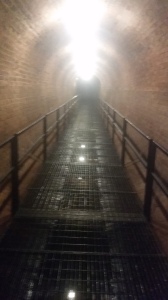
It is hard to not be awed by the scale and tremendous care that goes into supporting the gigantic system bringing water to New York City and the surrounding counties. Flowing from the Catskill/Delaware Watersheds and the Croton Watershed, approximately one billion gallons of water are consumed in New York City every day, serving 8.5 million residents as well as millions of tourists each year. In all, the New York City Water Supply System provides nearly half the population of New York State with high-quality drinking water.
It is humbling to realize just how dependent all these millions of people are on the water supply functioning the way it is supposed to. Water constitutes about 50-70% of our bodies as human beings. Water from the reservoirs, aqueducts, and street-side sampling stations is quality tested by the Department of Environmental Protection’s scientists, with nearly 630,000 analyses performed on the samples in four state-of-the art laboratories (NYC DEP).

Photo © Kelly Moltzen, NYC Watershed Tour

In my own tradition of Franciscan Catholicism, we are called to protect water as a component of creation care, protecting the Earth and our bodies as temples of God. Saint Francis of Assisi heard a call from God to “repair my house, which…is falling utterly into ruin.” While initially he took this as a call to repair a physical church, he eventually came to understand it as a call to repair the institutional Church and the universal house of God, the common home that we all share here on Earth. His spirituality grew to such depths that he came to regard Earth as Mother Earth, and water as Sister Water. By protecting water, we are protecting our health and that of our fellow sisters and brothers with whom we share the Earth. Unfortunately, in many places in the United States and across the world, oil spills from pipelines, contamination from hydraulic fracturing, and runoff from nuclear power plants and industrial agriculture threaten water supplies. Thus, I see the call to watershed discipleship as extremely important for people of faith.

Photo © Kelly Moltzen, NYC Watershed Tour

Pope Francis explained the risks of water pollution in his 2015 encyclical, Laudato Si’, which many people of faith are using to make the case for why we should care for our common home. He dedicates a whole section of the encyclical to the issue of water – noting the importance of fresh water for healthcare, agriculture and industry; the prevalence of droughts and water poverty; the outbreak of water-related diseases among the poor; water pollution resulting from certain mining, farming and industrial activities; the phenomenon of water privatization by large multinational businesses; and the link between water scarcity and the cost of food and various products which depend on its use. He also notes, “access to safe drinkable water is a basic and universal human right.”

Photo © Kelly Moltzen, NYC Watershed Tour

Yet, my concern about water quality and safety stems not just from the threats modern society and corporate greed pose to water safety. I am also concerned because water is the healthiest drink. I work at Bronx Health REACH, which partners with school districts and a number of faith-based and community organizations to promote water as the best alternative to beverages of poor nutritional quality. In this work, it is necessary to make sure we can point to sources of safe drinking water if we want people to switch away from unhealthy drinks like sodas and drinks high in sugar.
First, I’ll share a little bit about why we are advocating for people to drink more water, and then share about other environmental and health concerns related to our water system. Finally, I’ll mention the work of a number of faith-based and community organizations in and around New York City that work to ensure there is safe drinking water, and that people are accessing it in healthy amounts.

Photo © Kelly Moltzen, NYC Watershed Tour

Soda, sports drinks, fruit-flavored drinks, and other sugar-sweetened beverages may sound appealing and some drinks (such as sweetened teas) sometimes get marketed as “natural” and healthy. Society is swamped with marketing campaigns that make these consumer products sound appealing thanks to billion-dollar advertising budgets, but these products are contributing to high rates of diabetes, obesity, and other chronic diseases, with higher and higher rates of these diseases showing up in young children. In turn, this causes rising healthcare costs for dealing with these diseases.

Photo © Kelly Moltzen, NYC Watershed Tour

In the Bronx, a third of adults consume at least one sugar-sweetened beverage per day, and over half of children do. A third of Bronx children are overweight or obese, as are two thirds of adults (NYC DOHMH).
Not only do sugar-sweetened beverages contribute to the desecration of our own bodies, but often the industrial processes used to create unhealthy beverages also place undue harm on the environment and make public water sources less and less accessible to the people who need them most. None of this is healthy for people or the economy, but these practices line the pockets of corporate executives. By infusing a sense of value on drinking water, Bronx Health REACH is working to ensure the continued safety of our water supplies.

20170912_155310
Photo © Kelly Moltzen, NYC Watershed Tour

In addition to drinking water directly, water is also used to grow food for our local food system. Some of us in the watershed are teaching children about growing food and getting local food into schools, restaurants, and churches. There is even a farm run by Catholic sisters who sell the produce to local parishes for use in farm shares, food pantries and soup kitchens. Bronx Health REACH has been instrumental in developing a “Bronx Salad” that encourages consumption of culturally relevant foods while also encouraging community members to grow some of the produce locally, such as in community gardens. A feature of this salad is the dressing made from the Bronx Hot Sauce, which is made by a local chef with peppers grown in the Bronx. A version of this salad is becoming increasingly available in NYC school cafeterias, thanks to a partnership between school gardening and Farm to School efforts in NYC. As we seek to develop a regional food system and reduce the environmental impact of our food system, we must also seek to protect the water supplies that nourish the crops.

Photo © Kelly Moltzen, NYC Watershed Tour

While the water delivered to NYC is pristine and high quality, many New Yorkers remain skeptical of its safety. Therefore, I recently took a tour of the watershed that supplies water to NYC to learn just how safe the water is to drink. The watershed tour guide was immensely knowledgeable, and I became even more deeply aware of the tremendous gratitude and respect we owe to those who work around the clock to make sure that our water is safe. I gained an even greater understanding of the importance of ecology when learning about how the Department of Environmental Protection plants trees upstream from a river to help keep the water pure by filtering out toxins and impurities.
Despite the fact that high-quality water is delivered to NYC, I hear a lot of anecdotal concerns about water safety, at least in the Bronx. Legitimate concerns have been raised since water testing in NYC was examined more critically after the Flint water crisis. It turns out that the pipes bringing water into homes and schools are often old and made of lead, increasing the likelihood of lead leaching into our drinking water. Water samples from 2016-2017 found high levels of lead in some samples of NYC water delivered to schools, leading to outcries about the water’s safety. Even though the NYC Health Department affirms that no cases of lead poisoning have resulted from the high lead levels found in water, any level of lead that makes its way into our bodies is too much. We can reduce the likelihood of lead leaching into our water supply at the individual level by letting the water run before drinking it, only drinking water that comes out of the tap cold (since lead dissolves in hot water), or using special filters that remove lead.
Ideally, we could have well-funded public education campaigns about how to drink water safely, and to replace old pipes with non-lead pipes. But in order to get government and funders to prioritize water safety and public health, we need to tap into our internal spiritual wells, which drive us to improve the quality of life for all, and build increased momentum for the needed changes through advocacy and organizing.

Photo © Kelly Moltzen, NYC Watershed Tour

A loose coalition of organizations in the New York City area partner to ensure a safe water supply and to encourage water consumption. Food & Water Watch has policy campaigns to improve pipe infrastructure. The New York City Health Department and Bronx Health REACH have campaigns to encourage water consumption and educate people about the health risks of sugar-sweetened beverages. Water2Kids is a business started by twin children in the Bronx (with the support of their mother) who wanted to see water — instead of sugar-sweetened beverages — marketed to their age group. Groups like Religious Organizations Along the River (ROAR), the Metro New York Catholic Climate Movement (a chapter of the Global Catholic Climate Movement), and the Center for Earth Ethics of Union Theological Seminary work to protect the New York water supply from projects that could threaten the safety of our water. Churches, including Franciscan and other Catholic parishes in NYC, organize film screenings about water and other environmental issues.
As interdependent creatures, human beings must rely on one another and our ecosystems in order to access the most basic of necessities required to sustain life on Earth. Because of our reliance on our watershed and other natural resources, ensuring our water sources remain uncontaminated is vitally essential and part of the call for us to steward creation. As we are interdependent with the Earth to meet our physical human needs, so the parts of the body of Christ are also interdependent with one another. We all need one another in order to make the impacts we want to make.
It can often feel overwhelming to try and address all of the overlapping and interconnected issues related to ensuring safe and healthy water and food supplies. However, as Wendell Berry says in the documentary Look and See: A Portrait of Wendell Berry, we must work on putting the pieces together one at a time, rather than all at once — such as starting with our own watershed. By taking bite-sized steps to address our ecological crisis while continuing to recognize the interconnectedness of issues and our interdependence with the local ecosystem, we can put faith in action by creating a livable, sustainable future for current and future generations.

Wednesday, July 19, 2017

Building a Catholic Food System

Mass is a celebration of the Eucharist – the body of Christ, the physical manifestation of the divine presence on Earth.  Millions of Catholics go to mass every weekend and celebrate the Eucharist, and Christians of other denominations similarly celebrate the meal Jesus had with his disciples through weekly services. But what could it mean to take the celebration Eucharist even more literally, to live out the spirituality to which our faith calls us?  
“Give us this day, our daily bread,” we pray.  How can we let Christ live through us in a way that better helps to ensure the world’s hungry receive their daily bread?  This question is one that necessitates seeing ourselves as interconnected with our brothers and sisters across the world, so we can maintain the spiritual stamina needed to create a more equitable food system.

Photo credit: Gerald Wen, member of Harmony Farm CSA & St. John the Baptist/Holy Cross Justice, Peace & Integrity of Creation (JPIC) Care for Creation committee. Used by permission.

In December 2016, I helped to facilitate a food justice breakout session within a Catholics of Color Climate Justice workshop, organized by the Franciscan Action Network in partnership with Climate Reality Project. One participant asked how we might build a food system based on Catholic principles.  I started brainstorming what this might entail.  
A food system based on Catholic principles would value the five components of the Good Food Purchasing Policy of the Center for Good Food Purchasing: local economies, environmental sustainability, valued workforce, animal welfare, and nutrition.  A Catholic food system would care for the hungriest among us, both on the other side of the world as well as the other side of the street, making sure everyone not only has access to food but gets fresh, quality, nutritious food, that doesn’t degrade environmental sustainability but promotes ecological well-being instead.
Picture this: going to church and picking up a farm share with food grown on an organic and biodynamic farm owned by a religious congregation, and having surplus food that is grown be donated to the church’s food pantry or soup kitchen, thanks to the support of other parishioners who can help to subsidize the additional food.  Having quotes from Pope Francis’ encyclical “Laudato Si” sent out in your weekly emails reminding you to pick up your vegetables from the farm. Coming together with parishioners to discuss integral ecology and spirituality – how our faith informs how we live out our engagement with the earth. And having the opportunity to visit the farm, meet the people who are growing your food, and even pick some of the produce yourself.
That is exactly what is happening through Blessed Sacrament Church on the Upper West Side of Manhattan in New York City. Blessed Sacrament has partnered with a lay Catholic community known as Benincasa (after St. Catherine Benincasa of Siena) that is supported by the Dominican Sisters of Blauvelt. Benincasa Community and the Social Action Committee at Blessed Sacrament host a “Community-Supported Agriculture” program and support the church soup kitchen in providing farm-fresh food to the community. Grown on Harmony Farm and offered alongside a discussion group and excerpts from Laudato Si in a weekly newsletter, the food provided by Harmony Farm is spiritual as well as physical nourishment.

Photo credit: Kelly Moltzen, taken at the Care for Creation retreat at Harmony Farm

2016 was the first year of the farm-to-church partnership. In 2017, Benincasa is starting to expand the program to other parishes.  The parish of Holy Cross/St. John the Baptist, run by the Capuchin Franciscans, has taken up the challenge, and parishioners have decided to donate funds for a bulk farm share that will be purchased for a new soup kitchen. The soup kitchen will be parishioner-led, too: several people have already taken the Food Protection Course and are now licensed to supervise the many volunteers who are ready to prepare food and service the soup line.
Biodynamic, organic farms such as Harmony Farm are practicing regenerative agriculture, which can trap carbon in the air into the ground, thereby helping to reduce carbon dioxide in our atmosphere. If regenerative agriculture was practiced globally, 100 percent of current, annual carbon dioxide (CO2) emissions would be sequestered (1). This is a refreshing alternative to food from a system that is a significant contributor to climate change and environmental degradation.
Because of our industrial growing practices and cultural habits, red meat and dairy contribute nearly half of the greenhouse gas emissions of all foods.  The beauty of eating a plant-based diet with foods grown locally, organically, and even biodynamically, is that we can build a new food system while simultaneously providing climate solutions.  Creating a system that feeds the hungry with nourishing food from the earth also puts the power and responsibility back into parishes and takes it away from the food industry, a harmful system that perpetuates food insecurity as Andrew Fisher recently made clear in his book Big Hunger: The Unholy Alliance Between Corporate America and Anti-Hunger Groups.
Ideally we can work towards the full meaning of the root of the word charity (caritas), or “expressing one’s love for God through love for one’s neighbor and oneself,” a love that includes dignity of the receiver, and also keep in mind the roots of charity in the Judaic tradition, where the highest level of charity is when receivers are able to become self-reliant.
To make more sustainably, ethically grown produce available at an affordable price for all, we would need a Farm Bill that is committed to biodiversity and incentivizes produce rather than subsidizes corn and soy as staple crops.  More affordable fruits and vegetables would also support equity for communities of color that are disproportionately affected by health disparities. We also need to make sure children are being taught from a young age about healthy and plant based eating, and provide them with opportunities to learn how food connects them to the earth and others.  There is a great model for this in WANDA, or Women Advancing Nutrition, Dietetics & Agriculture.  In ensuring that young girls are educated about the healing power of food, we can build a new generation of leaders who have the capacity to sustain themselves and one another.  
By focusing on growing more fruits and vegetables and promoting a plant-based diet, we can also reduce our reliance on the resource-intensive and often unethical practices involved in raising animals for meat.  The Saint Francis Alliance is a network of Catholics who advocate for vegetarianism because they recognize the inherent value and dignity of animals, and know that an ecosystem which treats animals well will also be one that is sustainable and healthy for humans.
Equipping ourselves to build a food system that honors the dignity of all of creation promotes improved food and water security for everyone, which can also help reduce violence and conflict especially in areas where resource scarcity is a threat to human livelihood.  Yet creating this new food system is not an easy feat: in order to accomplish the task, we must recognize the challenges that come with defending creation, ethical treatment of farmworkers, and the poor’s access to land. This became a lifelong struggle for Cesar Chavez, and Oscar Romero was assassinated standing up against corruption and in the name of Christ, and for the right of the poor to have access to land.
A food system based on Catholic principles is one based on the premise of integral ecology – recognizing our profound interdependence with the earth and one another.  It’s based on Catholic Social Teaching, including honoring the dignity of all, rights of workers, a for the poor and vulnerable, and the care of creation.  And it’s one that allows us to fully live out the three dimensions of eco-conversion: the spiritual dimension, lifestyle dimension, and advocacy dimension. It’s one based on grace, where the incarnate is not desecrated, but its sacredness is instead honored as we share meals through community.
(also posted at christianfoodmovement.org)  

(1)  Rodale Institute (2014). Regenerative Organic Agriculture and Climate Change: A Down-to-Earth Solution to Global Warming. This compelling statistic is backed up by Rodale’s Farming Systems Trial (FST), the longest-running test comparing organic and conventional cropping systems.

Sunday, September 11, 2016

The Light Game

"Through a young intern’s experience in a garden, we come to see how learning the incarnational art of growing food and coming to a deeper realization about why we’re here go hand in hand. In this simple narrative, Mary craftfully weaves together a story that reveals the connections between organic farming, religion, science, energy, light, and life to bring us to reflect on life’s deepest questions. The Light Game is a must-read for anyone searching for deeper answers, who questions religion, or who questions their own life. It will help us more clearly see the light inside each of us, and show us how we can each bring more light into the world."   - Kelly Moltzen, MPH, RDN, Franciscan Action Network board member & Wake Forest University School of Divinity Re:Generate Fellow
https://www.amazon.com/dp/B01LW7JEED/ref=cm_sw_r_fa_dp_t1_1DQ0xbA0YRJ3Z
The Light Game, available for free on Kindle until September 14

"What if life is a game and there is only one rule?"

We are all searching for answers about the meaning of life. So much so that we often forget about the core truths about what it means to be human, and that people of all religions are in search of the same thing. Those of us who practice religion all seek to understand the "cause, nature, and purpose of the universe," which is how dictionary.com defines "religion."  But what if it all is actually very simple?  In my own tradition, I've realized that the very premise of the religion - that Jesus' life was about sharing what it means to live as an incarnational human being on Earth - becomes an elephant in the room when considering the schism between the life Jesus taught us to live and the human predicaments we find ourselves in at this moment in time. Catholics and other Christians often forget about the incarnationality of the religion, spending entire livelihoods deliberating on philosophical and theological concepts instead of living out what the religion tells us is important: how we live life on Earth.

To be in-carnate is to be in the flesh. The word represents a spiritual being residing in the flesh, in human form.  To fully live as humans we have to know how to nourish ourselves with food from the Earth, and so it is important for us to consider how the food we eat is grown, and even better, to grow some of that food ourselves.

Mary Colborn helps us make a critical discovery about the nature of the energy that produces our food in her new book The Light Game. As an organic farmer and lifelong spiritual Catholic, Mary helps us see that the energy that is used by plants to produce oxygen and food comprises the same vibrating molecules that make up the energy we live off of and is shared in our interactions with one another. Through the various parables (many rooted in the natural world) and healings performed by Jesus throughout his lifetime, Jesus was telling us the same thing. We are Light. We are all made of the same divine energy as that which created the cosmos.  And therefore, each of our lives is critically important, as we are all part of the whole.  We all have an integral role to play during our time on this Earth.

I met Mary through the Global Catholic Climate Movement and had a chance to visit her farm in Michigan recently after supporting her Barnraiser fundraiser earlier in the year.  I've been interested in supporting her work especially after realizing our shared interests in promoting regenerative agriculture within the Catholic Church. While at the farm, Mary read me an almost finalized version of The Light Game. As the book is about a young intern working in the fields of Mary's farm and wrestling with questions about the meaning of life as Mary ponders these questions out loud with her, it felt almost as if I was in the book itself, as I helped harvest produce and talked to Mary about the contents of the book. We picked green beans and raspberries and reflected on Franciscan spirituality, integral ecology, and the challenges of trying to sustain a farm in this day & age with little government support for small-scale organic farmers. I met Mary's sister Tina, saw the chickens, barns that need repair, and acres and acres of unused farmland potential that could be created into a teaching farm with student interns as Mary envisions. I also saw the giant Love Letter on the side of her barn that she talks about at the end of the book. As a struggling small-scale organic farmer, Mary hopes to use the proceeds from the book to revitalize the farm, create a food hub and internship program for young farmers. She's not working alone, either- Mary hopes to do this in tandem with the Kalamazoo Valley Community College Food Innovation Center, which is building a food hub for farmers in the Kalamazoo Valley of Michigan.


I cannot stress enough how exciting this project is, and how profound The Light Game's message is. I would really like you all to read it, and so would Mary.  In honor of World Suicide Prevention Day (September 10), Mary is making her book available for free for five days, downloadable on Kindle or the Kindle app.  Please check it out and share your comments - we'd love to hear what you think! 

Tuesday, August 30, 2016

New Heaven, New Earth: Musings on Permaculture & Integral Ecology

There has been oppression, corruption and war for millennia – this, we know, is not something new.  Jesus and other prophets have actively taught means of interacting within corrupt systems to bring about Heaven on Earth.  Many of these people, Jesus included, did their ministry and prayer work in natural environments, and told parables that led people to contemplate the natural world. Coming to these realizations throughout my lifetime, I immediately recognized myself in the story of permaculture expert Bill Mollison, as told by Fred Bahnson in Soil and Sacrament:   

Mollison had grown up in a small village in Tasmania, and became horrified as he saw fish stocks collapsing and large sections of forest disappear. He began to protest against the political and industrial systems that were to blame. ‘But,’ he wrote in Introduction to Permaculture, ‘I soon decided that it was no good persisting with opposition that in the end achieved nothing.’ For the next two years Mollison withdrew from society. When he returned he realized he did not want to oppose anything ever again and waste his time. He wanted to come back only with something positive, ‘Something that would allow us all to exist without the wholesale collapse of biological systems.’ What Mollison came back with was the beginnings of permaculture, a ‘whole human system.’

I likewise decided early on to focus on building a holistic system. Thus, my career has focused on nutrition, public health, and promoting sustainable food systems whenever possible.  What I’ve realized since the 2015 release of Pope Francis’ encyclical Laudato Si is that these ideas about permaculture are very much in line with the concept of integral ecology.

We can use systems thinking to create an integrative food system where food grown is connected with healthcare and mental health systems and a more sustainable environment. We can put the systems in place to put Laudato Si into action. To do this, we will need to educate, but we will also need to organize and advocate.  While Bill Mollison may have chosen not to oppose anything and Jesus did much of his ministry in the fields, we must also remember that Jesus also flipped over the money tables in the temple.  It’s clear in the Bible that man cannot serve God and mammon, and that we shouldn’t worship the golden calf. Yet, that is what so many corporations are doing now.

According to Citizens United, corporations are people – but of course, we know that’s not true. We know the people making up the corporations are people, not the corporations themselves.  We also know it is not good to wish ill on the people making up the corporations. It is good for them to have livable wages to support themselves and their families, healthcare, and meaningful work.  To make sure everyone has a fair chance for these necessary components of healthy living, the people who are most enmeshed in corporate greed – amassing gross wealth off the backs of the working poor – need to back off a good deal from their possessions and materialism, and open up to more of a communal, humane way of interacting with the marginalized.

With decent financial and human investment, we can create more green jobs, include people affected by injustices in the decisionmaking processes, and capture carbon back into the Earth to mitigate and prevent catastrophic climate change. This is just as true in the Bronx as it is in Harlem, as it is in the bayous of Louisiana, as it is in Haiti, and every other place affected by environmental injustices.

In Soil and Sacrament, Fred Bahnson also quotes Rainer Maria Rilke:

All will come again into its strength:
the fields undivided, the waters undammed,
the trees towering and the walls built low.
And in the valleys, people as strong
and as varied as the land.

What a vision of shalom! When I read this I thought first of bringing shalom to Haiti, where the water has been dammed up leading to much dry, barren land, exacerbated by deforestation due to the burning of wood for cooking fires.  It reminded me of the holistic vision for restoration of this island nation that I’ve begun brainstorming with several others over the past few months. But this prophetic poetic excerpt can apply to anywhere we wish to restore with shalom - God’s holistic peace.

So, how can we begin sharing the stories of people creating a “new heaven and a new earth” and living out Laudato Si?  When will we begin to create a truly holistic system of integral ecology and shalom?

1Then I saw “a new heaven and a new earth,” for the first heaven and the first earth had passed away, and there was no longer any sea. I saw the Holy City, the new Jerusalem, coming down out of heaven from God, prepared as a bride beautifully dressed for her husband. And I heard a loud voice from the throne saying, “Look! God’s dwelling place is now among the people, and he will dwell with them. They will be his people, and God himself will be with them and be their God. ‘He will wipe every tear from their eyes. There will be no more death’ or mourning or crying or pain, for the old order of things has passed away.” – Revelations 21: 1-4

Sunday, August 30, 2015

A Theology of Liberation and the New Creation

The concept of a biblical approach to addressing poverty has always challenged me, especially since learning of St. Francis of Assisi’s commitment to voluntary poverty when I was a teenager.  What should be my role, as a person of privilege, in helping to bring justice and equity to the poor?  Several years ago, inspired by Francis of Assisi and the modern day Shane Claiborne, I could think of no better way to figure this out than by moving to the Bronx and living in community with others wanting to figure this out too. 

Shortly after moving to the Bronx, my roommates and I were blessed with the opportunity to get to know two people who moved into the apartment above us whose life and work was steeped in the practice and culture of liberation theology.  I was intrigued by the many stories they told of oppressed peoples in Central and South America, and even here in the United States, rising up and confronting the established powers with the power of the Gospel.  The power of the Gospel in the hands of the poor and oppressed seemed like something St. Francis of Assisi would have rejoiced at seeing.

While I do not profess to be an expert in liberation theology or the history of the Latin American church, I have learned from Joseph Nangle OFM in his book Engaged Spirituality that the liberation theology movement led to a decision made at the 1968 Catholic Bishops’ Conference in MedellĆ­n, Colombia, to prioritize the poor over the privileges of the established order. The impact of this decision by the church hierarchy was not inconsequential: more and more people sought to join this movement which was improving the authenticity of the church, now that the church was authentically serving the New Creation. And over the next ten years, a thousand people were killed for working to implement this vision, by those who preferred the status quo – continuing the Christian tradition initiated by Jesus of the faithful being persecuted by empire. 

This is the backdrop of where our current pope, Francis, was formed and lived out his early years.  The Latin American church, Pope Francis, and all they represent show us what it means to live out what Fr. Joe Nangle calls an “engaged spirituality” – a spirituality that impacts how we live every aspect of our lives.  Living a life of voluntary poverty, a counter-cultural lifestyle that prefers simplicity to consumerism, is a direct threat to the empire of capitalism that permeates society.  Following Jesus’ call to leave everything behind and follow him, the way Francis of Assisi did, leads us more fully into our faith and begs us to develop a deeper spirituality whereby we can live a richer, fuller life.  Living out an engaged spirituality allows us to recognize our interdependence with one another and all of God’s creation, and feel a sense of reverence and wonder about it all.

It is from this perspective we can best appreciate what Pope Francis has to share with us in his encyclical Laudato Si’.   Pope Francis lays out the framework for an integral ecology – one in which we recognize the responsibility we have as human beings to humbly come to terms with our place in the world.  Building on the spirituality and mysticism of St. Francis of Assisi that is so clearly expressed in St. Francis’ Canticle of the Creatures, Pope Francis continues on to “read the signs of the times” (Mt 16:3) and lays out what St. Francis would say “is ours to do” in this day and age, in order for us to rise to a new consciousness and accept the responsibility God gave us when he gave us the gift of life on Earth.

When God became incarnate through Jesus, He did so to show us how to live as a human being on Earth in such a way that would allow us to honor our Creator.  Through Jesus and the many parables He gives us throughout the Gospel, we learn how to prioritize the needs of the poor and marginalized, not take more than we need, and counter the empire that leads to suffering and injustice.  What Pope Francis is doing now is building off of the lessons of Jesus, Francis of Assisi, and many others from recent church history who are also working towards the “New Creation.”

This “New Creation” is what is referred to in the Lord’s Prayer, Isaiah 65, Revelation 21, and in many other places throughout the Bible and religious liturgy.  It is the Kingdom of God that Jesus spoke of so often and invited us to join him in building.  We are invited to be co-creators with God, which maybe is another way of interpreting the call St. Francis heard to repair God’s house, when he prayed in front of the cross of San Damiano. What greater honor do we have than the opportunity to accept this supreme invitation? 

To build the New Creation, we will need to take a sincere look at the institutionalized racism, economic inequity and environmental injustices surrounding us, and examine our contributions to the injustices and desecration of the ecological web of life.  We as humans have pushed our ecosystems beyond that which is sustainable, and it is we humans (especially the most vulnerable, who are least responsible for the desecration) – as well as other creatures – which are suffering the consequences of veering too far away from God’s original plan for humankind.  I am of the belief, much like Pope Francis, that the only hope for humanity may lie in the humility and spirituality delineated by the life of St. Francis of Assisi and the posture towards creation he shows in his Canticle of the Creatures.

Wednesday, July 15, 2015

Laudato Si’! Multifaith Global Climate Convergence in Rome with OurVoices

It’s been two weeks since the OurVoices Global Multifaith Emerging Leaders Convergence in Rome.  Though, I feel like it will take me years to fully process all of the amazing conversations and people I met.  Attending a global convergence with emerging leaders from across all faiths and denominations working on climate justice issues brought my abilities to work on international community public health, which I studied several years ago at NYU, to a whole new level. 

The Convergence started out with a rally in St. Peter’s Square, where we brought banners and props made in partnership with the artists from the People’s Climate March in NYC last September, where our group of multi-faith leaders came together to thank Pope Francis for his encyclical, Laudato Si’. The continuity of the movement from the People’s Climate March really made me feel like I was part of a genuine movement. Those of us who identified as Catholic took the opportunity to ask people in St. Peter’s Square if they were interested in signing a petition created by the newly created Global Catholic Climate Movement, which has already been endorsed by Pope Francis. Leaders within the Global Catholic Climate Movement are aiming to get 1 million signatures before the United Nations climate negotiations in Paris this upcoming December.
During the rest of the convergence, we heard from seasoned leaders from many faith traditions as well as emerging leaders from across the world.  I was able to see the common language about care for the Earth across all faith traditions: Hinduism, Baha’i, Islam, Judaism, Catholicism, Sikhism, and others. Learning from so many traditions which were new to me, while also being reminded of the ecologically spiritual rootedness of my Franciscan Catholic tradition, was an enlightening and spiritually liberating experience. 

From Sister Kathleen Deignan at Iona College, I identified with her feeling from living in NYC that NYC is “desertified.” I am drawn to believe that the Catholicism rooted in the Celtic spirituality of Ireland, a family heritage which we both share, played a role in the progression of our spiritual understanding of our need to green the earth again.

During the U.S./Canada breakout session, I learned of the lobby training that Emily Wirzba does with students through her work at Friends Committee on National Legislation in Washington, D.C.; Daniel Blackman’s work in Atlanta to organize around a commemoration of the 10 year anniversary of Hurricane Katrina; and Austin Weisgrau’s work in Portland around fossil fuels and dialogue about the Israeli-Palestinian conflict. I also learned of Josh Smith’s work with Catholic youth in Canada and the Green Churches Network in Canada and Norman Levasque’s book “Greening Your Church.” I was reminded of Louis Tillman’s work to provide economic opportunity for youth through a church community garden in Chicago, as I happened to already meet him just a few short weeks ago through Wake Forest University’s Re:Generate fellowship program.

What I’ve found through my experiences is that the issues that affect disenfranchised communities are the same regardless of if the community is in the mountains of Peru, in the mountains of Appalachia, or in the streets of Harlem or the Bronx in the United States.  Environmental injustices lead to health disparities, such as how children become contaminated with poisoning from toxic heavy metals such as lead, cadmium, or arsenic, because of pollution. People are robbed of their ability to sustainably grow food on the land and end up looking for nourishment from the fossil-fuel intensive industrialized food system, because of the interests of private development agencies and corporate monopolies. What this convergence added to the conversation was the explicit acknowledgement that when the church is silent against the companies that commit such atrocities, she is acting as an accomplice.

As shared by Rabbi Lawrence Troster from Rabbis and Cantors for the Earth, the climate crisis is not a political issue but a spiritual issue, so we need to approach it as such.  Yet hearing of the struggles to activate religious leaders in Asia and move “environmental” issues away from just being “secular” issues reminded me of the challenges we face.  How can we move people who will fast for a cause for a brief period of time, to adopt long-term lifestyle changes such as recycling?  Listening to Betty ask her global sisters and brothers to donate soil and sand to the island of Fiji because of the realities of sea level rise strengthened my conviction to continue working on climate justice issues.  I even got a chance to journey alongside Yeb Sano, the former U.N. climate negotiator for the Philippines, who has left his role with the U.N. to lead the People’s Pilgrimage – a powerful worldwide spiritual movement that reinforces the need to address the climate crisis principally from a spiritual perspective, because as demonstrated by previous U.N. climate negotiations and political decisions made by various nation-states across the world (especially the most powerful), status quo political rhetoric and decisions are not getting us to where we need to be fast enough.

I was inspired by interfaith efforts to promote public health, such as the Global Interfaith WASH (WAter, Sanitation, Hygiene) Alliance and the leadership in sustainable development happening in Africa and Asia. I was impressed to learn of the leadership of the Archdioceses in Australia and Kenya and their support of young adults in promoting Catholic ecology.  The Catholics in Australia are even working on organizing around World Youth Day 2016 which will be held in Poland and include a focus on ecology.
 I was not surprised to learn that the Garifuna people in Honduras already have a climate mitigation plan. Many countries in the Global South have shown leadership in addressing climate change issues because these are the countries impacted the most.

Most importantly, the convergence participants were given a bit of encyclical education by a Vatican representative.  “Encyclical” means circular letter. It is meant to be passed on, read, and listened to. To a room of emerging multi-faith leaders, the Vatican representative told us to “take it, make it your own, be true to it and pass it on with love, sympathy, compassion.”  “Take the time to read it.” “Don’t give up on religious leaders.”  “It’s not about ecology, it’s about life.”  And if we have other ideas for the leadership that the Church should take?  What do seminaries have to teach the Church?  Take it to the Vatican: “The Vatican is not a control tower.”

Pope Francis’ encyclical sends a powerful message. It tells us that the Church acknowledges the eco-spirituality of St. Francis of Assisi, the realities of how our careless human lifestyles are disrupting the climate and affecting the most vulnerable, and how a spiritual grounding and integral ecology can help us to reverse much of the damage we’ve done.  I am very interested to see how discussion and dialogue about the encyclical (there are already a number of discussion guides out there) can lead us to healing and a deepened appreciation of faith and community.

Before we left the convergence, we were given the task of drafting an eco-theological project to carry out in our home countries. The three stages of the task include an eco-autobiography, exploring spiritual resources, and finding a forum for public expression. I found this task to be a particularly useful exercise in helping me define my own spiritual journey.  The first stage of the task helped me unearth the experiences I had while growing up that led to the development of my spiritual convictions, and had me ponder my relationships with land, animals, and other non-human forms of life. It also had me reflect on my personal experiences with environmental justice issues, something I’ve had to intentionally immerse myself in because of the protection that the privilege that my cultural and socioeconomic background afford me.

Regarding the texts which have informed my eco-theology, I thought about the creation mandate found from a spiritual reading of Genesis in the Bible, as well as a few books by Franciscans I’ve learned of through the Franciscan Earth Corps, including “Care for Creation: A Franciscan Spirituality of the Earth” and “Repair My House: Becoming a Kindom Catholic.”  These texts have helped inform my understanding of Catholic Franciscan eco-theology, such as the “thisness” of each unique creation of God and the Trinitarian worldview which underpins Christianity.  Drawing from these reflections to identify the basis of my own spiritual beliefs about the environment, I found that contemplation and the practice of being present can lead us to experience a feeling of oneness and interconnectedness, and a sense of divine presence in everything and everyone in the world. This translates into the responsibility we share to steward the Earth and treat everyone and everything as our brothers and sisters because of the kinship we share with creation; as well as the need to work for justice and reconciliation, especially when we have privilege, because of the Gospel’s call to prioritize the poor.

The last part of the task, finding a forum for public expression, is still a work in progress for me. Perhaps my reflections here are a form of this public expression, though as I continue to process all that I learned during the convergence and continue to learn at home, I’m sure my ideas will continue to evolve. I welcome thoughts on meaningful methods I could use for public expression, but most importantly, I encourage everyone reading this to create their own version of the eco-theological project.  As the convergence participants learned from the Vatican representative, it is up to us to take what we find in the encyclical as well as in our own faith traditions, and use it in our own contexts.  As St. Francis said, “I have done what is mine to do; may Christ teach you what is yours to do.”