Showing posts with label environmental justice. Show all posts

Saturday, September 7, 2019

For the Love of Neighbor


Catholics held a Day of Action for Migrant Children on Wednesday.  We wrote prayers for the children on strips of fabric and tied them to a metal fence representing the cages that kids are being kept in at the immigrant detention centers. Jean Stokan from the Sisters of Mercy spoke about the hypocrisy of the U.S. government, funding and fueling so much of the violence outbreaking in Central America, meanwhile we won’t even let migrants escaping the violence to find refuge in the U.S. without putting them in cages, without proper hygiene, food or water, and keeping them separated from their parents.  “Child detention is illegal under international law and causes serious mental, physical, and emotional health complications.”

The American Academy of Pediatrics and many other public health organizations have declared the policies towards immigrants a public health crisis. Immigrant policing has been found to negatively impact trust of government health information including vaccination of children.  The children are experiencing psychological trauma and may experience long-term mental health effects due to the detention and separation.  The experiences may also exacerbate prior exposure to traumas in the home country (eg, violence) and during migration (eg, extortion). The children are not getting appropriate medical care; are forced to be in situations of poor sanitation and living conditions, and sit through long detention periods without the stimulation necessary to promote healthy child development. AAP past-president, Dr. Colleen Kraft, said “Separating parents from their kids at the border contradicts everything we know about children's welfare.”   

Indeed, any human rights crisis is a public health crisis, when people are not provided with the means by which they need to live dignified lives with nourishing food, clean water, clean air, shelter, clothing, bodily autonomy, and anything else they need to maintain hygiene and safety. 

Meanwhile, the public health community is also fighting for Child Nutrition Reauthorization, and ensuring the future of school wellness in New York State.  Almost 90% of school districts in New York State are missing at least one element of a comprehensive school wellness policy, as measured by the WELLSAT tool from the Rudd Center for Food Policy and Obesity.  New York City school wellness advocates are trying to tackle support for school wellness, better school food and nutrition education at the city, state, and federal levels right now.   At the state level through the WELL Campaign, we want to see a model state school wellness policy that incorporates mental health and social and emotional learning alongside standards for school food, nutrition education, physical activity and physical education.   


And yet, the battle against inhumane immigration policies towards children seems totally disconnected from the battle for child health and well-being in schools.  Why can’t we see these efforts for the dignity & well-being of children as all connected, and work on them together?  Surely the faith community knows that public health advocates working on child nutrition also don’t want to see kids in cages, right?

Perhaps you think that nutrition education is not as important as immigration policies and ending child detention. (I for one have not seen many Catholic organizations promoting nutrition education, with exceptions including Altagracia Faith & Justice works in Northern Manhattan and the Mercy Center in the South Bronx - organizations serving immigrant communities while also protesting the root causes that cause people to have to flee their countries in the first place.) 

We cannot forget that everything is connected.  The Amazon and other rainforest areas are being destroyed to clear land for cattle that is used to produce fast food, palm trees to create an unhealthy oil which is used as a stabilizer for processed foods, and other consumer products such as paper, furniture and clothing which our consumeristic society is so dependent on.  If we do not each take a serious look at our lifestyles and examine how they are contributing to the destruction of human livelihoods and lives, and teach children to do the same, we will continue to perpetuate the crises in front of us. We live in an interconnected world and all our actions have consequences. We are called to co-create with our Creator, not destroy.  Youth are striking for the climate, some every Friday through the Fridays for Future movement, and some are just gearing up specifically for September 20.  

There are ways these youth can take action in their own schools though; we need to be proactive in our actions, not just resistant.  The Tisch Center for Food, Education and Policy at Teachers College, Columbia University has created a handout about what youth can do to demand more sustainability solutions in their schools. This could take the form of starting a school garden, participating in Meatless Mondays, campaigning for a Green Team, advocating for food and nutrition education, or decreasing food waste from school lunch. 

At the end of a “Climate Emergency and the Green New Deal” event at Riverside Church, a Fridays for Future climate strike march video was played with a backdrop of music from the song Bella Ciao which was used to protest the Nazis (re-written with lyrics to protest climate change), followed by the audience singing along. This was a chilling reminder of the connection between genocide and environmental destruction, which is all too close to home in the United States, with the founding of this country being at the expense of so many Native American lives, and too timely, with the killing of indigenous peoples in the Amazon and in other rainforests where the native peoples rely on the rainforests for their livelihoods.  

I have been encouraged to see youth leadership in promoting peace and living in harmony with creation, such as the Interfaith Youth Forum for Environment & Peace organized by JPIC Franciscans Africa.  However, the work of JPIC Franciscans Africa and the work of many other religious groups across the world are doing to promote this harmony is deeply underfunded.  For now, I have created a Go Fund Me page for JPIC Franciscans Africa, with hope and prayers that sufficient funds can be raised by the time of their 2019 youth forum which will be held during the Global Climate Strike on 20 September and World Peace Day on 21 September. The report about my trip to Kenya for the Laudato Si Generation conference, which I wrote about recently, has been translated into Spanish, French and Italian by the International Council of the Secular Franciscan Order.   

Recognizing the divide and silos between the public health community and faith-rooted social justice advocates, who seem to rarely work together for the same causes, several colleagues and I have decided to start the Interfaith Public Health Network, which seeks to engage and mobilize faith communities to improve population health, by addressing the underlying determinants of health (social, commercial, environmental, and political) through connecting, convening, cultivating, and catalyzing.  We want to bring the voices of healthcare advocates and the faith community together to advocate for things such as reduced emissions which lead to child asthma, promote agroecology projects and appreciation of plant-based meals which support the health of environment and people, support mental health services for people in need, and improve gun violence prevention measures.  

During a visit to New York by Olivier van Beeman from the Netherlands, author of the book “Heineken in Africa” the Interfaith Public Health Network organized an event with Olivier van Beeman along with Minister Onleilove Alston and Dr. Nicholas Freudenberg at the CUNY School of Public Health. We brought together the faith and public health communities to learn about the insidious practices of a multinational corporation that takes advantage of government tax loopholes in order to make its profits at the expense of the African community.  Some governments are even intertwined with the company, such as in Burundi.  This is the type of issue the Interfaith Public Health Network wants to raise awareness about: as Minister Onleilove Alston pointed out, in her religious tradition, it’s not a sin to drink, but it’s a sin to commit injustice.  And these injustices, involving government collusion with multinational companies, is what’s contributing to poverty, violence, despair and migration of our neighbors in many countries throughout the world, our common home. 

Saturday, January 27, 2018

Water and Health in the Bronx: Protecting the Sacred

It is hard to not be awed by the scale and tremendous care that goes into supporting the gigantic system bringing water to New York City and the surrounding counties. Flowing from the Catskill/Delaware Watersheds and the Croton Watershed, approximately one billion gallons of water are consumed in New York City every day, serving 8.5 million residents as well as millions of tourists each year. In all, the New York City Water Supply System provides nearly half the population of New York State with high-quality drinking water.
It is humbling to realize just how dependent all these millions of people are on the water supply functioning the way it is supposed to. Water constitutes about 50-70% of our bodies as human beings. Water from the reservoirs, aqueducts, and street-side sampling stations is quality tested by the Department of Environmental Protection’s scientists, with nearly 630,000 analyses performed on the samples in four state-of-the art laboratories (NYC DEP).

Photo © Kelly Moltzen, NYC Watershed Tour

In my own tradition of Franciscan Catholicism, we are called to protect water as a component of creation care, protecting the Earth and our bodies as temples of God. Saint Francis of Assisi heard a call from God to “repair my house, which…is falling utterly into ruin.” While initially he took this as a call to repair a physical church, he eventually came to understand it as a call to repair the institutional Church and the universal house of God, the common home that we all share here on Earth. His spirituality grew to such depths that he came to regard Earth as Mother Earth, and water as Sister Water. By protecting water, we are protecting our health and that of our fellow sisters and brothers with whom we share the Earth. Unfortunately, in many places in the United States and across the world, oil spills from pipelines, contamination from hydraulic fracturing, and runoff from nuclear power plants and industrial agriculture threaten water supplies. Thus, I see the call to watershed discipleship as extremely important for people of faith.

Photo © Kelly Moltzen, NYC Watershed Tour

Pope Francis explained the risks of water pollution in his 2015 encyclical, Laudato Si’, which many people of faith are using to make the case for why we should care for our common home. He dedicates a whole section of the encyclical to the issue of water – noting the importance of fresh water for healthcare, agriculture and industry; the prevalence of droughts and water poverty; the outbreak of water-related diseases among the poor; water pollution resulting from certain mining, farming and industrial activities; the phenomenon of water privatization by large multinational businesses; and the link between water scarcity and the cost of food and various products which depend on its use. He also notes, “access to safe drinkable water is a basic and universal human right.”

Photo © Kelly Moltzen, NYC Watershed Tour

Yet, my concern about water quality and safety stems not just from the threats modern society and corporate greed pose to water safety. I am also concerned because water is the healthiest drink. I work at Bronx Health REACH, which partners with school districts and a number of faith-based and community organizations to promote water as the best alternative to beverages of poor nutritional quality. In this work, it is necessary to make sure we can point to sources of safe drinking water if we want people to switch away from unhealthy drinks like sodas and drinks high in sugar.
First, I’ll share a little bit about why we are advocating for people to drink more water, and then share about other environmental and health concerns related to our water system. Finally, I’ll mention the work of a number of faith-based and community organizations in and around New York City that work to ensure there is safe drinking water, and that people are accessing it in healthy amounts.

Photo © Kelly Moltzen, NYC Watershed Tour

Soda, sports drinks, fruit-flavored drinks, and other sugar-sweetened beverages may sound appealing and some drinks (such as sweetened teas) sometimes get marketed as “natural” and healthy. Society is swamped with marketing campaigns that make these consumer products sound appealing thanks to billion-dollar advertising budgets, but these products are contributing to high rates of diabetes, obesity, and other chronic diseases, with higher and higher rates of these diseases showing up in young children. In turn, this causes rising healthcare costs for dealing with these diseases.

Photo © Kelly Moltzen, NYC Watershed Tour

In the Bronx, a third of adults consume at least one sugar-sweetened beverage per day, and over half of children do. A third of Bronx children are overweight or obese, as are two thirds of adults (NYC DOHMH).
Not only do sugar-sweetened beverages contribute to the desecration of our own bodies, but often the industrial processes used to create unhealthy beverages also place undue harm on the environment and make public water sources less and less accessible to the people who need them most. None of this is healthy for people or the economy, but these practices line the pockets of corporate executives. By infusing a sense of value on drinking water, Bronx Health REACH is working to ensure the continued safety of our water supplies.

20170912_155310
Photo © Kelly Moltzen, NYC Watershed Tour

In addition to drinking water directly, water is also used to grow food for our local food system. Some of us in the watershed are teaching children about growing food and getting local food into schools, restaurants, and churches. There is even a farm run by Catholic sisters who sell the produce to local parishes for use in farm shares, food pantries and soup kitchens. Bronx Health REACH has been instrumental in developing a “Bronx Salad” that encourages consumption of culturally relevant foods while also encouraging community members to grow some of the produce locally, such as in community gardens. A feature of this salad is the dressing made from the Bronx Hot Sauce, which is made by a local chef with peppers grown in the Bronx. A version of this salad is becoming increasingly available in NYC school cafeterias, thanks to a partnership between school gardening and Farm to School efforts in NYC. As we seek to develop a regional food system and reduce the environmental impact of our food system, we must also seek to protect the water supplies that nourish the crops.

Photo © Kelly Moltzen, NYC Watershed Tour

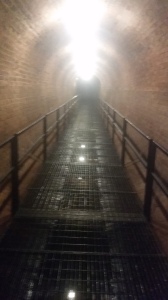
While the water delivered to NYC is pristine and high quality, many New Yorkers remain skeptical of its safety. Therefore, I recently took a tour of the watershed that supplies water to NYC to learn just how safe the water is to drink. The watershed tour guide was immensely knowledgeable, and I became even more deeply aware of the tremendous gratitude and respect we owe to those who work around the clock to make sure that our water is safe. I gained an even greater understanding of the importance of ecology when learning about how the Department of Environmental Protection plants trees upstream from a river to help keep the water pure by filtering out toxins and impurities.
Despite the fact that high-quality water is delivered to NYC, I hear a lot of anecdotal concerns about water safety, at least in the Bronx. Legitimate concerns have been raised since water testing in NYC was examined more critically after the Flint water crisis. It turns out that the pipes bringing water into homes and schools are often old and made of lead, increasing the likelihood of lead leaching into our drinking water. Water samples from 2016-2017 found high levels of lead in some samples of NYC water delivered to schools, leading to outcries about the water’s safety. Even though the NYC Health Department affirms that no cases of lead poisoning have resulted from the high lead levels found in water, any level of lead that makes its way into our bodies is too much. We can reduce the likelihood of lead leaching into our water supply at the individual level by letting the water run before drinking it, only drinking water that comes out of the tap cold (since lead dissolves in hot water), or using special filters that remove lead.
Ideally, we could have well-funded public education campaigns about how to drink water safely, and to replace old pipes with non-lead pipes. But in order to get government and funders to prioritize water safety and public health, we need to tap into our internal spiritual wells, which drive us to improve the quality of life for all, and build increased momentum for the needed changes through advocacy and organizing.

Photo © Kelly Moltzen, NYC Watershed Tour

A loose coalition of organizations in the New York City area partner to ensure a safe water supply and to encourage water consumption. Food & Water Watch has policy campaigns to improve pipe infrastructure. The New York City Health Department and Bronx Health REACH have campaigns to encourage water consumption and educate people about the health risks of sugar-sweetened beverages. Water2Kids is a business started by twin children in the Bronx (with the support of their mother) who wanted to see water — instead of sugar-sweetened beverages — marketed to their age group. Groups like Religious Organizations Along the River (ROAR), the Metro New York Catholic Climate Movement (a chapter of the Global Catholic Climate Movement), and the Center for Earth Ethics of Union Theological Seminary work to protect the New York water supply from projects that could threaten the safety of our water. Churches, including Franciscan and other Catholic parishes in NYC, organize film screenings about water and other environmental issues.
As interdependent creatures, human beings must rely on one another and our ecosystems in order to access the most basic of necessities required to sustain life on Earth. Because of our reliance on our watershed and other natural resources, ensuring our water sources remain uncontaminated is vitally essential and part of the call for us to steward creation. As we are interdependent with the Earth to meet our physical human needs, so the parts of the body of Christ are also interdependent with one another. We all need one another in order to make the impacts we want to make.
It can often feel overwhelming to try and address all of the overlapping and interconnected issues related to ensuring safe and healthy water and food supplies. However, as Wendell Berry says in the documentary Look and See: A Portrait of Wendell Berry, we must work on putting the pieces together one at a time, rather than all at once — such as starting with our own watershed. By taking bite-sized steps to address our ecological crisis while continuing to recognize the interconnectedness of issues and our interdependence with the local ecosystem, we can put faith in action by creating a livable, sustainable future for current and future generations.

Tuesday, September 22, 2015

Faith and the Environmental Justice Movement: A Franciscan Perspective

Catholics are natural allies in the struggle for environmental justice.  As a Catholic, I have been most drawn to the example of St. Francis of Assisi, who is our tradition’s patron saint of the environment. St. Francis, who followed Jesus’ call to leave everything behind and live a life of intentional poverty and simplicity, lived in a medieval world where people, who had previously enjoyed a more intimate bond with their ecosystems, began to be disconnected from the land as a result of extensive land holdings owned and controlled by the small minority in the ruling class.  This separation of people from the land, coupled with abuse of power, led to oppression and a class of poor deprived of their humanity and dignity.

Francis’ identification with the poor gradually brought him to an understanding of his place as a “little brother” to all humanity and all creation. His famous “Canticle of the Creatures,” which is the inspiration for Pope Francis’ encyclical Laudato Si, reveals how integrally interconnected St. Francis felt to all elements of God’s creation. He came to see God reflected in all of creation and therefore sought to maintain the integrity of all creation.

The essence of Franciscan spirituality, then, is a focus on seeing God in everyone, especially the marginalized, and working toward protecting the integrity of all creation. Therefore, by working to maintain the integrity of all creation—with particular emphasis on the poor, vulnerable, and those least responsible for environmental degradation—Franciscan spirituality lends itself to a focus on environmental and climate justice.

Through St. Francis’ commitment to following the convictions of his faith, he consciously joined the “story of power,” which is the story of humans and creation that also “includes a focus on the differences of status, privilege, social class, levels of influence, wealth and political and social power of various groups” (Franciscan Care for Creation).  This is the story that continues through the environmental justice movement today.

Environmental justice communities have a unique perspective on the ways in which consumer culture and differences in societal power negatively affect the health of impacted communities. By tapping into our own spiritual wells and joining the spiritual movement for climate justice, we can help to bridge the knowledge and lived experience of these communities with the moral clarity of our faith traditions – thereby more effectively helping to ensure that policies and systems prioritize the health of people and ecosystems, rather than business interests.

By examining our own tradition’s religious teachings on the environment and engaging in dialogue with congregations about our role in causing harm to – or protecting the integrity of – creation, we are lending our voices to the environmental justice movement. We are moving ourselves and others into a new consciousness about how to live in unity and harmony with the earth and one another.

Some of the ways Catholic congregations and other faith communities are doing this include conducting energy audits of houses of worship, converting to clean energy where possible, starting compost and garden projects, divesting from fossil fuels, and advocating for better U.S. climate policy. The Franciscan Action Network, where I serve on the Board of Directors, is leading an interfaith coalition working to get money out of politics and calling out members of Congress who have been supportive of the Koch brothers’ “No Climate Tax” pledge through a #KochvsPope campaign, among other actions.

Above all, we are promoting the concept of simple living, which allows us to practice a life of ongoing conversion and provides lifelong opportunities to live in right relationship with our world. Catholics in the Franciscan tradition embrace an ecology that keeps humans and all of creation out of harm’s way. It allows us to see the “thisness” – the unique specialness of each particular living and nonliving thing – that is characteristic of Franciscan spirituality.

Written for WE ACT for Environmental Justice, http://www.weact.org/member-blog-kelly-moltzen